“And now, little children, abide in Him, that when He appears, we may have confidence and not be ashamed before Him at His coming.”
1 John 2:28
Part 1 showed that believers who live unfaithfully can forfeit eternal rewards at the Judgment Seat of Christ. But the Bible goes further: it warns that some believers will also experience shame when Jesus returns.
This idea often shocks Christians. Isn’t heaven a place of joy, not shame? True—but Scripture is clear that, at least for a time, shame will be part of the believer’s experience at Christ’s judgment seat.
Is Shame Really Possible for Christians?
John’s warning in 1 John 2:28 isn’t directed at unbelievers. He’s writing to believers—those he affectionately calls “little children.” His point is plain: if we don’t abide in Christ, we may face Him with regret and embarrassment, rather than boldness.
The passive Greek verb John uses, ‹ αἰσχύνω › (aischynō), can mean either to be ashamed or to be put to shame. Those two options paint very different pictures:
- To be put to shame would imply Jesus Himself humiliates the believer.
- To be ashamed points more toward self-awareness—the believer realizing the weight of their wasted opportunities.
Scholar Samuel Hoyt argues that the latter makes better sense of the New Testament’s overall tone: Jesus is not vindictive toward His people, but believers may still feel the crushing awareness of their own failures when standing before Him.
A Biblical Example: Peter’s Bitter Weeping
Think about Peter. After he denied Jesus three times, Luke records this moment:
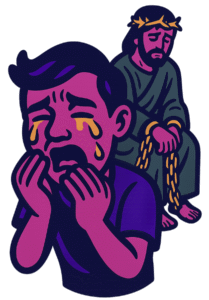
“And the Lord turned and looked at Peter. And Peter remembered the saying of the Lord, how he had said to him, ‘Before the rooster crows today, you will deny me three times.’ And he went out and wept bitterly.” —Luke 22:61–62 (ESV)
We don’t know exactly what expression was on Jesus’ face when He looked at Peter. It may not have mattered. Just the realization of failure in the eyes of the Lord was enough to overwhelm Peter with bitter grief.
This is likely similar to what John describes in 1 John 2:28. The shame believers feel at Christ’s coming may not come from Jesus scolding us—but from us realizing, in His presence, how we failed to live faithfully.
Shame as Self-Realization, Not Punishment
It’s important to stress: this is not about losing salvation. Believers remain secure in Christ’s finished work. The shame is not condemnation—it is the pain of seeing missed opportunities, wasted gifts, and neglected faithfulness in the light of His glory.
Hoyt puts it this way:
“The shame arising in the servant is likely not a consequence of Christ’s direct punishment or chastisement, but instead a result of the guilt from self-realization.” (The Judgment Seat of Christ, p. 144)
Reflection Question
When you imagine standing before Jesus, do you feel confident or hesitant? What areas of life might you be tempted to “hide” from His gaze?

Next in the series: Part 3: The Darkness Outside and the Weeping and Gnashing of Teeth
Sources
- Samuel L. Hoyt, The Judgment Seat of Christ: A Biblical and Theological Study (Milwaukee: Grace Gospel Press, 2011).
- David Anderson, Maximum Joy: 1 John — Relationship or Fellowship? (Conroe, TX: Grace Theology Press, 2013).
- Luke 22:59–62; 1 John 2:28.